
Ink + Inspiration: A Student Writing Retreat
Join the School of Art Art Education program on April 1 and 2, in collaboration with the Graduate School and International Education, for an immersive writing retreat for University of Arkansas undergraduate and graduate students who are at any stage of the writing process.
Created and co-hosted by Dr. Kathy J. Brown, Endowed Assistant Professor of Art Education and Director of Graduate Studies in Art Education, with support from co-host Julia Smith, Associate Director of Graduate Student Support, at the U of A Graduate School and International Education.
Attendance is flexible; participants can attend both days, one day, etc. Register on HogSync here.
AGENDA
Subject to change. All rooms are located in the Fine Arts Center (FNAR). Parking encouraged in U of A parking lots (with permits) with paid parking options in Harmon Parking Garage and Stadium Garage.
Day 1 — April 1 | 8:00 AM – 2:00 PM
Location: FNAR
8:00–8:55 AM – Welcome: Sign-In, Breakfast, and Networking
FNAR Lobby
9:00–9:55 AM — Breakout Session 1
(Students select one session; sessions repeat)
-
Room 216 (FNAR)
Kelsey Molseed, Health Sciences Librarian
Citing Your Sources -
Room 115 (Conference Room, FNAR)
Dr. Indira Bailey
Hook, Line, and Thinker: Writing Introductions That Engage Any Audience -
Room 211 (FNAR)
Dr. Gabrielle Smith
AI and Ethical Writing: When AI Gets It Wrong, Algorithmic Bias and What Writers Should Know -
Room 215 (FNAR)
Writing Center
Demystifying Academic Writing
10:00–10:50 AM — Breakout Session 2
(Choose one)
-
Room 216 (FNAR)
Kelsey Molseed
Citing Your Sources -
Room 115 (Conference Room, FNAR)
Dr. Indira Bailey
Hook, Line, and Thinker: Writing Introductions That Engage Any Audience -
Room 211 (FNAR)
Dr. Gabrielle Smith
AI and Ethical Writing: When AI Gets It Wrong, Algorithmic Bias and What Writers Should Know - Room 215 (FNAR)
UARK Writing Center
Writing Out of Your Head: Procrastination
11:00 AM–12:30 PM — Sustained Writing Romms
Multiple rooms available for writing time. Individuals will be encouraged to try the Pomodoro technique at this time to balance focus and breaks.
12:40–1:40 PM — Lunch & Dialogue
FNAR Lobby
1:40–2:00 PM — Wrap-Up & Raffle
FNAR Lobby
Day 2 — April 2 | 1:00 PM – 5:30 PM
Location: FNAR
1:00–1:55 PM – Welcome: Sign-In, Swag, and Lunch
FNAR Lobby
2:00–2:45 PM — Breakout Session 1
-
Room 316 (FNAR)
Drs. Aelim Kim & Borim Song
Finding Your Writing Rhythm: Sustainable Habits and Supportive Community -
Room 115 (Conference Room, FNAR)
Dr. Indira Bailey
Listening as Research: Transforming Interviews into Academic Writing -
Room 205 (FNAR)
Dr. Gabrielle Smith
Unlocking Your Research Question: Staying Focused While Writing -
Room 211 (FNAR)
Dr. Angela Laporte
Concept Mapping as a Visual Writing Prompt for Organizing Inquiry
2:50–3:35 PM — Breakout Session 2
-
Room 316 (FNAR)
Drs. Aelim Kim & Borim Song
Finding Your Writing Rhythm: Sustainable Habits and Supportive Community -
Room 115 (Conference Room, FNAR)
Dr. Indira Bailey
Listening as Research: Transforming Interviews into Academic Writing -
Room 205 (FNAR)
Dr. Gabrielle Smith
Unlocking Your Research Question: Staying Focused While Writing -
Room 211 (FNAR)
Dr. Angela Laporte
Concept Mapping as a Visual Writing Prompt for Organizing Inquiry
3:40–5:10 PM — Sustained Writing Rooms
Multiple rooms available for writing time. Individuals will be encouraged to try the Pomodoro technique at this time to balance focus and breaks.
5:10–5:30 PM — Snacks, Wrap-Up & Raffle
FNAR Lobby
Hosts
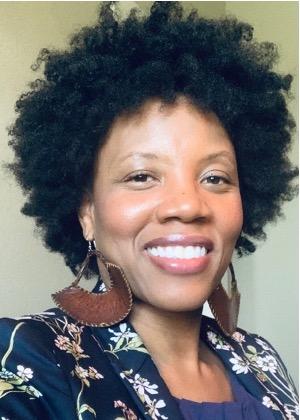
Dr. Kathy J. Brown, PhD., Endowed Assistant Professor of Art Education, is a practicing artist, former K-12 art teacher and current Director of Graduate Studies in Art Education at the University of Arkansas. Her research areas include Afrofuturism, African-American cultural narratives, pedagogies of place, antiracist pedagogies and arts based research. She is a member of academic journal review boards and in 2023 was an Amon Carter Museum Community Artist.

Julia Smith, Associate Director of Graduate Student Support. Julia’s worked on campus in various capacities since Fall of 2017, ranging from financial aid to student success initiatives, though a lot of her passion falls within working with first-generation and underrepresented students. In her current role, she helps support graduate students during their journey at the University of Arkansas through professional development, community building, and academic engagement workshops/ events. She is an alumna from Arkansas Tech University, where she received both her undergraduate and master's degree in psychology and Higher Education respectively.
Speakers + Sessions
 Dr. Angela M. La Porte is a Professor of Art Education at the University of Arkansas and a National Art
EducationAssociation Distinguished Fellow. She served as reviewer for national and
international journals such as theJournal of Cultural Research in Art Education (jCRAE) and as Associate Editor for the International Journal ofLifelong Learning in Art Education (IJLLAE). Her research and publications have focused on how visual arts education can promote
healthy, inclusive communities across abilities, generations, and cultures.
Dr. Angela M. La Porte is a Professor of Art Education at the University of Arkansas and a National Art
EducationAssociation Distinguished Fellow. She served as reviewer for national and
international journals such as theJournal of Cultural Research in Art Education (jCRAE) and as Associate Editor for the International Journal ofLifelong Learning in Art Education (IJLLAE). Her research and publications have focused on how visual arts education can promote
healthy, inclusive communities across abilities, generations, and cultures.
Session
Title: Concept Mapping as a Visual Writing Prompt for Organizing Inquiry
Description: Participants in this workshop will explore concept mapping as an approach to developing and organizing inquiry and writing. Bring research ideas that you want to explore, and apply visual formatting strategies tostructure your ideas, consider topic relationships, identify gaps in knowledge, and dig deeper into your topic for clearer, more critically developed writing.

Dr. Aelim Kim is an Assistant Professor of Art Education at the University of Arkansas, where she brings togetherher work as a visual artist, educator, and researcher. She earned her Ph.D. in Arts Administration, Education, and Policy from The Ohio State University. Her scholarship focuses on critical multiculturalism and digitalpedagogy, exploring ways to cultivate inclusive, globally engaged dialogue within visual culture education.

Dr. Borim Song is Professor of Art Education at the School of Art and Design of East Carolina University,Greenville, North Carolina. She holds her Ed.D. and Ed.M. from Teachers College, Columbia University in New York City. Her scholarly interests include new technologies for art education, online education practice,contemporary art in K-12 curriculum, and community-based art education.
Session (with Dr. Kim)
Title: Finding Your Writing Rhythm: Sustainable Habits and Supportive Community
Description: This session highlights how research writers can cultivate healthy writing habits by introducing several practical strategies adopted by the presenters. Both individual and collective approaches will be shared. First, participants will learn methods for developing a sustainable writing routine, maintaining a writing log, and creating a publication/productivity pipeline. The session will then focus on the importance of collaborationamong researchers. Facilitating a writing group is an effective way to build a supportive community for emerging scholars who seek to find collective wisdom and sustain themselves as happy research writers.

Dr. Indira Bailey is an Assistant Professor of Art Education at Claflin University. She holds a dual-titledoctorate in Art Education and Women’s, Gender, & Sexuality Studies from The Pennsylvania State University. Dr. Bailey’s expertise lies in addressing the underrepresentation of Black women artists in K-12 teaching resources and examining its impact on art educators’ pedagogical practices, curricular experiences, and the broader racial and gender inequities within educational institutions. Grounded in Black radical imagination, Black feminist thought, and pedagogy of vulnerability, her work advocates for inclusive curricula that generate new knowledge in arteducation. She is Co-founder of the National Art Education Association’s History and Historiography in Art Education interest group. Dr. Bailey received a seed grant to continue her archival project focusing on the history of art education at an HBCU. She is the editor of the Marilyn Zurmuehlen Working Papers in Art Education Journal and on the editorial board of the Journal of Cultural Research in Art Education. Her latestpublications are in The International Journal for Lifelong Learning in Art Education, Visual Culture & Gender, and Visual Art Research. Also, she is a professional visual artist, exhibiting throughout the US.
Sessions
Title: Hook, Line, and Thinker: Writing Introductions That Engage Any Audience
Description: In academic writing across disciplines, students often struggle to engage their audience while maintaining a strong scholarly tone. Whether you're writing a research paper, artist statement, lab report, grant proposal, orbusiness pitch, your introduction determines whether your audience leans in or tunes out.
This interactive workshop will show you how to craft compelling hooks and build introductions that are clear, confident, and purposeful. You will leave with practical strategies you can immediately apply to your ownwriting no matter your major. If you want your writing to stand out from the first sentence, this workshop is for you.
Title: Listening as Research: Transforming Interviews into Academic Writing
Description: Whether you're conducting an artist interview, researching community history, collecting qualitative data, writing a profile, preparing a business case study, or documenting oral history, knowing how to write effectivelyfrom an interview is an essential academic and professional skill.
This interactive workshop will teach practical strategies for you to move beyond the transcript, integrate quotes effectively, and transform conversation into clear, compelling writing ethically and professionally. If you want to turn conversations into strong academic writing, this workshop is for you.

Dr. Gabrielle P.A. Smith is an Associate Professor of Psychology at Texas Woman's University whose work centers Black women’s psychological well-being, identity, and resistance within social and institutional contexts. Trained in social psychology, her scholarship is grounded in Black feminist thought, intersectionality, and liberation psychology, with a focus on how structural conditions shape meaning-making, mental health, and collective care. Her research and teaching foreground Black women’s lived experiences as critical sites of psychological knowledge and methodological insight. In addition to her research, Dr. Smith has extensive experience mentoring graduate students and early-career scholars in academic writing, publication strategy, and grant development. She regularly facilitates writing accountability groups and professional developmentworkshops focused on sustainable, values-driven scholarship. Her approach combines evidence from motivation and self-regulation science with practical systems for protecting writing time and advancing long-term intellectual goals.
Sessions
Title: When AI Gets It Wrong: Algorithmic Bias and What Writers Should Know
Description: AI tools are increasingly used to summarize research, generate text, and assist with writing. However, these systems can reproduce biases present in the data used to train them. This session introduces students toalgorithmic bias and explains why AI systems sometimes produce misleading or incomplete information, particularly around race, gender, and marginalized communities. Participants will learn how to critically evaluate AI-generated content, verify claims, and use these tools responsibly when researching and writing academic papers.
Title: Finding Your Research Question: Staying Focused While Writing
Description: Writing projects often stall when students lose sight of the question that originally motivated their work. Thissession helps students clarify their research questions and maintain intellectual focus across multiple writing demands. Participants will explore strategies for connecting writing tasks to their broader research interests and sustaining momentum on long-term projects.
University of Arkansas Writing Studio

Prantica Singha is pursuing her Master’s in Higher Education and Administration. She works as an Academic Support Graduate Assistant at the Writing Studio and enjoys seeing students leave the studio with confidence in their writing. She believes writing is a meaningful process that helps express understanding, emotions, and knowledge. She especially enjoys supporting students with statements of purpose and social science related projects.

Zachary Tipton is the Marketing and Outreach GA at the Writing Studio and is completing his M.S. in Economic Analytics at the Walton College this May. Before finding his way to data and analytics, Zachary spent years as a field ecologist and environmental educator — experiences that taught him writing is less about following the "right" rules and more about knowing your audience. He's passionate about the ways writing changes shape across disciplines and loves a good conversation about why a lab report and a personal essay demand different kinds of clarity.
Sessions
Title: Demystifying Academic Writing
Description: Participants will learn about the function, form, and expectations of writing in the university. Topics include: therole of academic research in creating new knowledge; the use of previous research and sources; conventions for citation; and aspects of the writing process.
Title: Writing out of Your Head - Procrastination
Description: This presentation covers some ways to understand the intellectual and emotional work—and sundry difficulties—of the writing process. We will survey some high-impact writing practices and spend time examining our own approaches to the writing process so that we will be set up for success in the future.
 Kelsey Molseed is a Health Sciences Librarian in the University Libraries' Research & Instruction
Services Department, where she supports student and faculty researchers through teaching
and research assistance.
Kelsey Molseed is a Health Sciences Librarian in the University Libraries' Research & Instruction
Services Department, where she supports student and faculty researchers through teaching
and research assistance.
Session
Title: From Search to Citation: Making Library Resources Work for You
Description: The University Libraries provides access to hundreds of research databases and millions of books and ebooks. Navigating all of those resources can be daunting, but choosing the right ones and utilizing and citing them properly is an important aspect of scholarly research. This session will include a deep dive into some of the libraries' many resources and will offer an opportunity to practice advanced database searching. We'll also look at some tools to help researchers keep track of and cite research literature.
Register using the link below and stay tuned here and on our social media for more updates.
Quick InfoDate Locations Questions? Contact Dr. Kathy J. Brown, kjb038@uark.edu |